Author: shaheendaud

  • The Role That Remains

    There are roles we step into in life — and roles that settle into our bones.

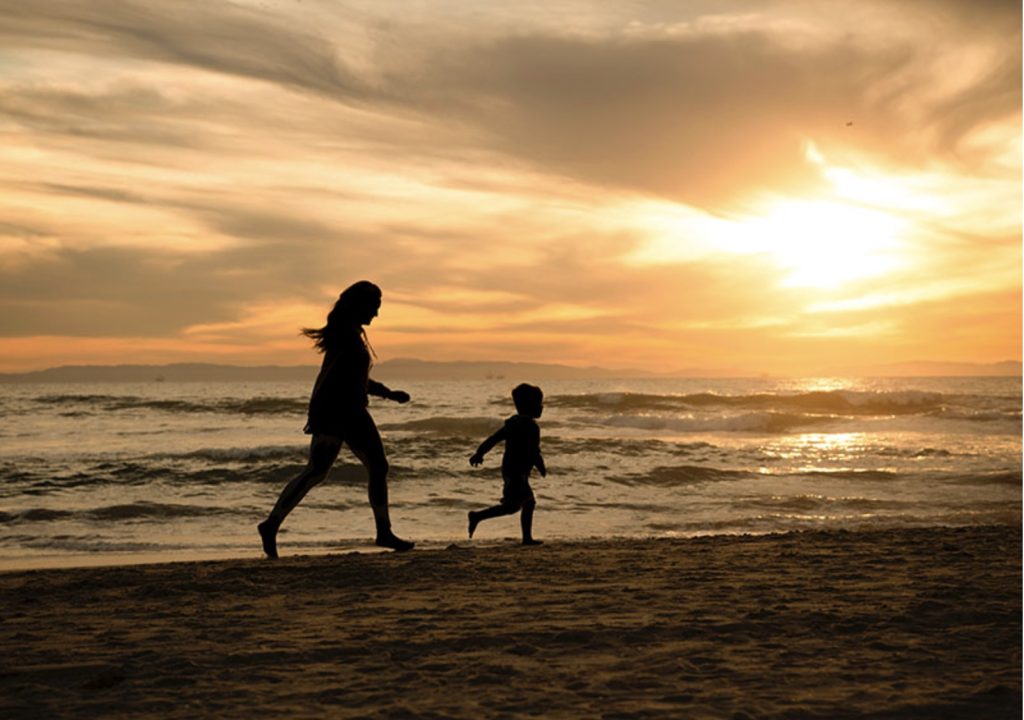
    Motherhood is often described in photographs.

    Small hands. School uniforms. Birthday candles.
    Matching smiles on carefully chosen days.

    But real motherhood lives somewhere else.

    It lives in the space between.

    The space between who you were before you became a mother…
    and who you are still becoming because of it.

    The space between closeness and distance.
    Between celebration and silence.
    Between the text that comes… and the one that doesn’t.

    This year, Mother’s Day felt different.

    Not because I stopped being a mother.
    But because life moves in seasons.
    And some seasons are complicated.

    We don’t talk enough about that part.

    We don’t talk about the quiet ache that can sit beside gratitude.
    Or the way you can deeply love your children and still feel the absence of them on certain days.

    And yet — something unexpected happened.

    I received a card and flowers.
    A small, thoughtful gesture.
    But what it gave me was far greater than the paper it was written on.

    It was a reminder.

    A mother will always be a mother.
    No distance.
    No silence.
    No complicated season can undo that.

    Motherhood is not just biology.

    It’s energy.
    It’s presence.
    It’s the way you make people feel safe and capable.
    It’s the way you hold space for growth, even when your own heart is stretching.

    And sometimes, when you least expect it, God sends goodness in different forms.

    A reminder through other people.
    A softness when you need reassurance.
    A quiet whisper that says: You are still her.

    In The Space Between, I write about the unseen parts of transformation.
    The internal changes that happen while the world continues as normal.

    Motherhood is like that.

    It evolves.
    It stretches.
    It humbles you.
    It teaches you that love is not measured by a single day, but by a lifetime of holding, guiding, praying, hoping.

    To every mother navigating distance, silence, growth, or complicated seasons:

    Your role does not diminish.
    Your love does not expire.
    Your identity does not dissolve.

    You are still the mother.

    And sometimes, the space between where you are and where you hope to be…
    is simply another chapter of becoming.
  • Behind the Title:

    Why The Space Between?

    When I first started writing this book, it didn’t have a title.

    It had feelings.
    It had tension.
    It had long internal monologues at 11:47pm when I absolutely should have been sleeping.

    But it did not have a name.

    For a while, I thought the story was about big things.
    Big moments.
    Big decisions.
    Big emotional earthquakes.

    But the more I wrote, the more I realised something slightly inconvenient:

    The real story wasn’t happening in the dramatic scenes.

    It was happening in the pauses.

    The silence before someone responds.
    The breath before you say what you actually think.
    The moment you stare at a message… and decide not to send it.

    That’s the space.

    The space between who you were… and who you’re slowly becoming.
    The space between endurance and understanding.
    The space between “I’m fine” and “I deserve more than this.”

    Change doesn’t usually arrive with background music and fireworks.

    It arrives quietly.

    It sits with you in the kitchen.
    It follows you into rooms.
    It waits in conversations.
    It grows while you’re pretending everything is perfectly under control.

    And if I’m honest, that’s what fascinated me most.

    Not the loud turning points.

    But the invisible changes.

    The internal negotiations.

    The emotional distance between two people sitting side by side on the same sofa.

    The version of you that knows something is changing… but isn’t quite ready to admit it yet.

    That is The Space Between.

    And yes — before it settled on this title, there were alternatives.

    Some were extremely intense.
    The kind of titles that sound like they should echo when you say them out loud.

    One felt like it belonged on a motivational mug.
    You know the type.
    “Rise. Transform. Conquer.”
    That felt too demanding.

    But The Space Between stayed.

    Because it didn’t try too hard.
    It didn’t over-explain.
    It left room.

    And sometimes the most powerful thing a story can do
    is leave space for you to meet it there.

    Who knows — a mug with a quote might be my next thing to fill the space.


  • Normal Life, Unusual Dream

    A few times while writing The Space Between, I woke up in the middle of the night with a sentence in my head.

    Not a full chapter. Not a clear plan. Just a line or an idea that refused to go back to sleep.

    So I would get up, open my laptop, and write it down before it disappeared again.

    Once, it wasn’t even a sentence. It was a feeling from a dream. I woke up with the emotion of it still very clear, and that moment eventually became a whole chapter in the book.

    It was about distance — the kind that isn’t just physical, but emotional. The kind that quietly shapes the spaces between people and makes you reflect on the relationships that matter most.

    In a way, that feeling ended up becoming part of the heart of the story.

    Most of the time, though, writing this novel didn’t look very glamorous.

    It looked like finishing a shift at work, making a cup of tea, and opening my laptop in the evening to work on a manuscript that slowly grew over time.

    During the day, I’m having conversations about KPIs, performance and targets.
    In the evening, I’m editing paragraphs, rewriting sentences, and sometimes wondering whether a chapter needs to be changed all over again.

    It’s an unusual combination.

    What many people don’t see is how long this actually took.

    The first idea for what eventually became The Space Between came to me more than twelve years ago. I started writing then, full of energy and ideas.

    And then life happened.

    At one point I stopped writing for nearly eight years. I couldn’t move the story forward and, for a long time, I wasn’t sure I ever would.

    But the idea never completely left me.

    Every now and then something would come back — a thought, a line, a moment that made me open the document again.

    Slowly, the story began to take shape.

    Most of the process of writing a book happens quietly. No one sees the evenings you spend working on it, or the moments where you decide to keep going even when it feels difficult.

    But those small steps eventually add up.

    Over time, that early idea became a finished novel — The Space Between — and the beginning of something else as well: my own independent imprint, Falcon House Press.

    Looking back, the biggest lesson has probably been this: you don’t need perfect conditions to begin something meaningful.

    Sometimes you just build it alongside everything else.

    As one line in The Space Between says:

    “She had always been more than she had been led to believe.”

    Normal life.

    Unusual dream.

    Releases 20th March 2026

  • Silence As Survival

    One of the themes that shaped The Space Between from the very beginning was this idea: silence as survival.

    We often speak about silence as weakness — or, conversely, as strength.
    But I’ve become increasingly interested in silence as strategy.

    In certain environments, silence is not passive. It is protective.

    It can be the quickest way to stabilise a situation.
    The safest way to prevent escalation.
    The most efficient way to preserve dignity when being heard is not an option.

    In that sense, silence can be deeply intelligent.

    Many high-performing people understand this instinctively.
    In workplaces, in families, in relationships — silence can function as emotional regulation, as containment, even as leadership. It can hold structures together.

    But survival mechanisms are not meant to become permanent identities.

    At some point, the very thing that once kept you steady can begin to shrink you. The strategy that maintained peace can quietly limit growth. What was once protective can become restrictive.

    That tension — between coping and choosing — is something I explore in this book.

    Not as autobiography, but as a human pattern.

    The space between silence and voice.
    Between survival and self-definition.

    Silence can be wise.
    But survival was never meant to be the end of the story.

    As I continue shaping this project, I find myself returning to that question:
    When does protection become limitation?

    It’s a question that feels increasingly relevant — not just in fiction, but in leadership, identity, and the quiet negotiations we all make with ourselves.

    More reflections on this theme will unfold here as the book moves closer to completion.

  • Why I Am Writing “The Space Between”

    I wrote The Space Between because there are lives shaped in silence that deserve to be named. So much transformation happens not in dramatic moments, but in the ordinary spaces — kitchens, corridors, car parks, late-night conversations with ourselves. This book is about endurance: the quiet kind that looks like loyalty and duty until it begins to feel like disappearance.

    The story grew from years of observation — of how people learn to make themselves smaller, how survival can masquerade as stability, how motherhood deepens strength even as it absorbs identity. It explores the moments before change becomes visible: the pauses, the private calculations, the thresholds crossed long before anyone else realises a life is being re-routed.

    Ultimately, The Space Between is for anyone who has stood between the life they are living and the life they sense might be possible. For those who stayed longer than they meant to, loved harder than was safe, or learned to breathe in rooms that grew too small. This is not a story about escape. It is a story about interruption — about choosing, slowly and bravely, to take up space again.